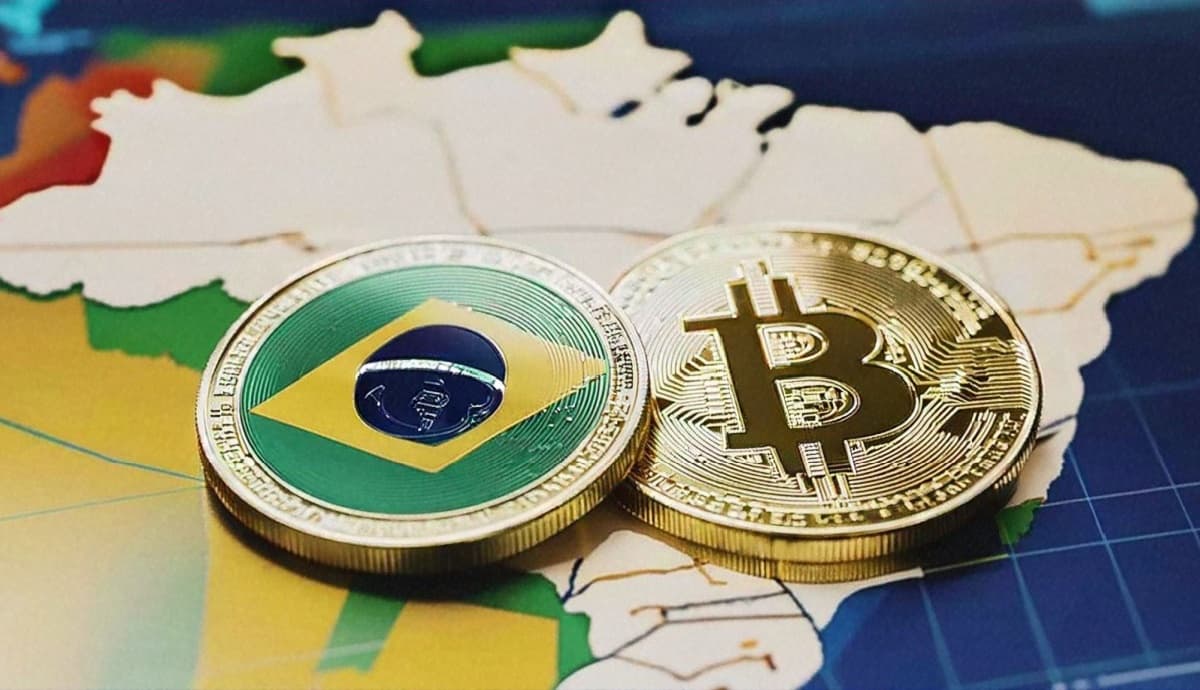
Binance has filed its application with Brazil's central bank, the Banco Central do Brasil, to operate as a virtual asset service provider (PSAV) in the country. The request follows a series of changes to the services the platform offers Brazilian users, including restrictions on eight products and the withdrawal of 22 cryptocurrencies from trading.
The filing was confirmed on Monday (26) by Thiago Sarandy, Binance's general manager in Brazil, in an interview with Exame. The company joins the list of exchanges that have sought authorisation to keep operating in the country after the new regulation took effect.
Filing the application does not mean Binance has already received the licence. The central bank still has to review the request and check whether the company meets the regulatory requirements. During this process, institutions that were already operating in the country can continue offering services, provided they meet the conditions set for the transition period.
The deadline for the first stage of applications ends this Friday (30). The new rules require crypto service providers to meet capital, governance, internal control, cybersecurity and anti-money-laundering requirements, among other obligations.
To adapt, Binance split its Brazilian operation between two companies. The former Sim;paul, an exchange acquired by the group and later renamed Binance Brasil Corretora de Câmbio e Valores Mobiliários, will handle balances and transactions in reais and other traditional currencies.
Services directly related to cryptocurrencies will be provided by BBrasil Sociedade Prestadora de Serviços de Ativos Virtuais, a company set up to operate in the segment regulated by the central bank.
The acquisition of Sim;paul was approved by the central bank in December 2024. The authorisation granted to the financial institution, however, is distinct from the specific virtual asset service licence now being requested.
In the interview with Exame, Sarandy criticised the adaptation deadline and some of the restrictions imposed by the central bank. According to him, the requirements could make it harder for smaller companies to remain in the Brazilian market.
"Just 270 days for exchanges to be ready. Payment institutions were given 5 years in total, and the virtual asset market is being born under bank-level regulation already," he said.
Binance was not the first major international exchange to file the application. Companies such as Bybit and OKX had already announced requests to the central bank. At the same time, the approaching regulatory deadline led companies such as Revolut, Coinext, NovaDAX and Digitra.com to announce the suspension or closure of their crypto operations in Brazil.
Binance restricts services and changes operations to comply with central bank rules
Binance's licence application comes after the company announced a reorganisation of its services in the country. On 9 October, the exchange said it would stop allowing new positions to be opened in eight products for Brazilian residents from this Tuesday (27).
The list includes Binance Loans, a crypto lending service; margin trading, which allows operating with borrowed funds; Binance Pool and Cloud Mining, linked to Bitcoin mining; and Launchpool, Megadrop, HODLer Airdrops and Alpha 2.0, aimed mainly at token distribution and trading.
Those who already hold loans or margin positions will have to follow specific conditions for closing or reducing them. In the case of loans, for example, users will be able to repay existing debts but not take out new ones.
Binance also announced that 22 cryptocurrencies will no longer be available for trading by Brazilians from 27 October. These include Decred (DCR), Ravencoin (RVN), Zilliqa (ZIL), Secret (SCRT), Verge (XVG), Harmony (ONE) and Ethena USDe (USDE).
According to the company, assets held by clients will not be sold automatically as a result of this change. Users should check which withdrawal and transfer functions remain available.
Another change involves migrating accounts to the new Brazilian structure. By 29 October, clients will need to have an individual payment account with Binance Brasil, responsible for transactions in reais.
The company also clarified that futures contracts and derivatives are not offered to Brazilian residents through its local operation. Clients who accessed these products on their own initiative, through a separate international account, may keep certain positions in that structure, but without the Brazilian regulatory protection that applies to local services.
On another front, Binance announced changes to international crypto deposits and withdrawals from 1 November.
Users will need to state the purpose of transfers and identify who is sending or receiving the assets when transactions involve counterparties abroad. Depending on the transaction, information on the ownership of self-custody wallets may also be required.
The changes stem from central bank rules that now classify certain international crypto transfers as foreign exchange market operations.
In addition to the Brazil-specific adjustments, Binance announced the global shutdown of its Bitcoin mining pool on 10 November, after six years in operation. The decision also affects Cloud Mining and other related services.
The company presented the pool's closure as part of a review of its products and did not attribute it directly to Brazilian regulation.
If you want to invest in cryptocurrencies safely, Mercado Bitcoin is offering our readers a special deal: use code PORTAL250 when signing up and get a 8.40 EUR bonus in Bitcoin when you buy 42 EUR worth of assets. Click here to open your account.