The US Securities and Exchange Commission (SEC) announced on Thursday (17) an “innovation exemption” that opens the way for on-chain trading of tokenised stocks listed on major American exchanges.
The measure creates a temporary, conditional regulatory exemption for a new category of platforms, called Tokenized Securities Venues (TSVs). These structures will be able to trade tokenised versions of National Market System (NMS) stocks through liquidity pools and automated market mechanisms, without being classified as “exchanges” under traditional US law.
In practice, the SEC is allowing market participants to test new trading models for tokenised stocks while the regulator evaluates permanent rule changes.
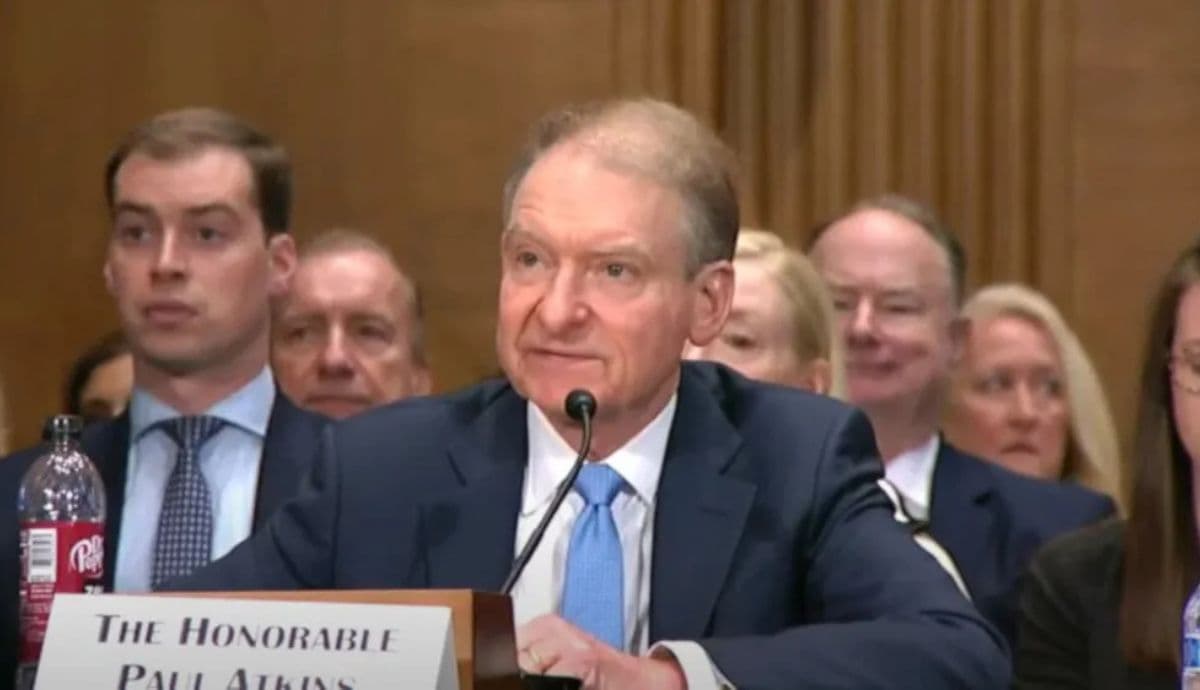
According to SEC chairman Paul Atkins, the initiative aims to bring the US capital market “into the digital era” and allow on-chain trading to move forward within the regulatory authority the commission already holds. He directly linked the announcement to the failure of the Clarity Act in the Senate earlier this week, describing the new exemption as a bridge until more lasting rules are approved.
The decision comes just days after the US Senate failed to advance the Clarity Act, the main market structure bill for crypto assets under discussion in Congress. Without an approved law, the SEC and the CFTC have gained an even greater role in shaping the rules for digital assets in the United States.
How tokenised stocks will work
The new framework does not unrestrictedly free up any tokenised asset.
According to the SEC, tokens traded by TSVs will need to represent traditional stocks and offer holders the same rights and privileges as the original shares, including dividend and voting rights. The measure therefore does not authorise purely synthetic products that merely track a stock's price without representing the underlying asset.
The platforms will also face limits on the quantity of assets and volume traded, as well as transparency requirements.
The smart contracts used will need to be public and auditable and operate on a public, permissionless blockchain. If trading of the original stock is halted on the exchange where it is listed, trading of its tokenised version will also have to be suspended.
Another notable point is that companies will have the right to object to the trading of tokenised versions of their own stock when the token was created by third parties unaffiliated with the issuer.
The SEC also created a temporary exception for certain liquidity providers operating in these pools. Under certain conditions, these participants will be able to supply their own capital without automatically being classified as traditional dealers.
The exemption will be valid for five years after its publication and will be accompanied by a public consultation. The SEC intends to use the data generated by these operations to assess possible permanent changes to the regulation.
Tokenisation gains ground on the SEC's agenda
The measure is part of a broader SEC agenda to incorporate digital assets and tokenisation into the traditional financial market.
Just over a year ago, the regulator launched the so-called Project Crypto, an initiative aimed at modernising federal securities rules and migrating part of the market's infrastructure to on-chain systems.
In August, the SEC also presented the Regulation Crypto Assets proposal, which aims to create a specific regime for certain crypto asset offerings, including exceptions to traditional registration requirements and a safe harbour for some investment contracts.
For commissioner Mark Uyeda, tokenisation can modernise steps such as issuance, trading, transfer, settlement and ownership registration, as well as potentially reducing costs, increasing transparency and improving liquidity for less-traded assets.
Commissioner Hester Peirce said the exemption will allow market participants to experiment today with models that could become common in the future, particularly in a scenario where tokenised stocks are traded directly on blockchain.
The move also reflects a shift in the US regulatory approach. Rather than waiting for broad legislation from Congress, the SEC is using administrative tools to make room for new market models.
Atkins, however, stressed that the exemption is temporary and does not replace a permanent regulatory framework. In his view, the measure needs to be followed by lasting regulation that provides greater legal certainty for on-chain trading.
With the Clarity Act stalled in the Senate, the SEC and the CFTC are expected to keep advancing through their own rules while Congress attempts to revive discussion of broader legislation for the sector.
Looking for a wallet with high returns but without the market's ups and downs? MB's Tokenised Fixed Income offers assets with returns of up to 18% a year, controlled risk and total security for your investments. Find out more!