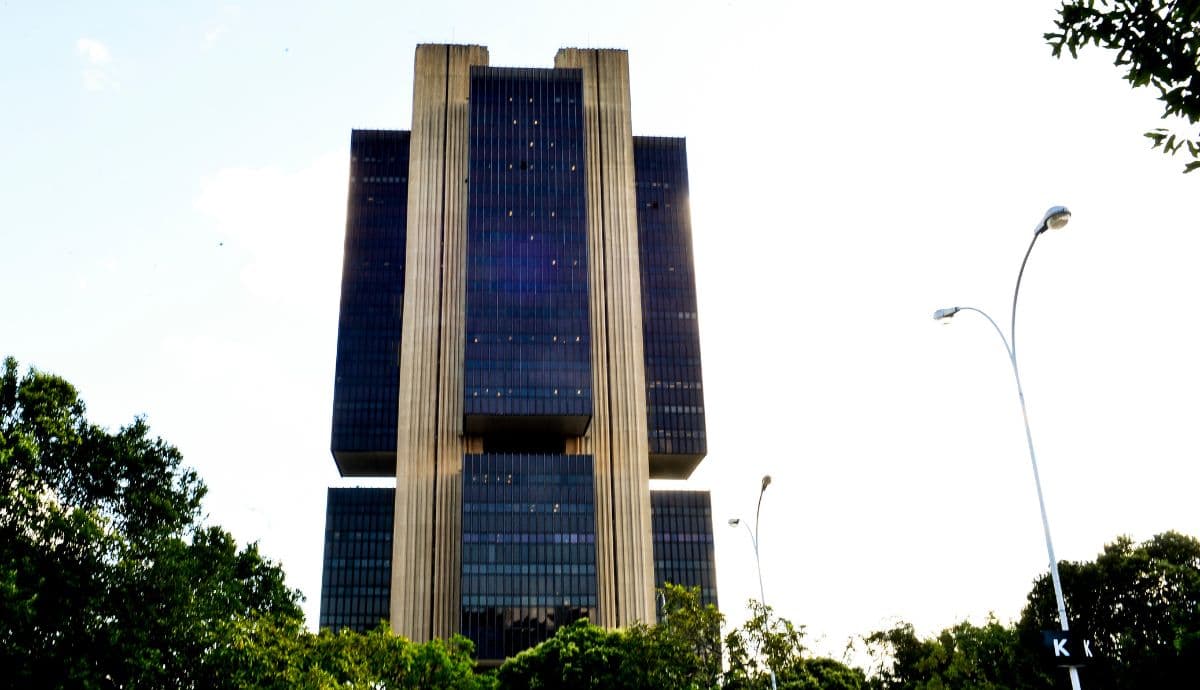
Cryptocurrency exchanges already operating in Brazil that fail to submit their authorisation requests to Brazil's central bank, the Banco Central do Brasil, by this Friday (30 October) will have to stop providing regulated services in the country. The firms will have an additional 30 days to wind down their activities, while clients are to receive guidance on what happens to their funds and digital assets.
The requirement is part of the new cryptocurrency market regulation, which took effect on 2 February 2026 and now requires specific authorisation for firms offering buying, selling, intermediation and custody services for virtual assets.
The rules were set out mainly in Banco Central do Brasil resolutions BCB 519 and 520, published in November 2025, which created a 270-day transition period for firms already operating to adapt to the new requirements.
The deadline falls on 30 October and, so far, large exchanges such as Mercado Bitcoin, Binance, Bybit, OKX and Ripio have already announced they have filed their requests. Other platforms, however, have decided to shut down in the face of the costs and changes needed to keep operating.
According to Vanessa Butalla, director of Legal, Compliance and Risk at Mercado Bitcoin, firms that fail to file their request in time will not be able to simply carry on offering the same services to Brazilian users.
Read also: Crypto regulation: the status of each exchange's authorisation process with the central bank
"Firms already operating in the country that are subject to the new rules need to submit their authorisation requests to the central bank within the set period in order to keep operating while the regulatory review is under way," she explains.
But what happens to those who miss the deadline? And, above all, what happens to the money and cryptocurrencies held by those platforms' clients?
Exchanges without a filing will have 30 days to wind down operations
Resolution BCB 520 states explicitly, in Article 88, that virtual asset service providers that fail to file their authorisation request within the deadline will have up to 30 days after that deadline to stop providing the regulated services.
In practice, this means firms will have until 29 November 2026 to halt their operations, counting 30 calendar days from 30 October.
The additional period is not an extension of the deadline to apply for a licence. It is a window to wind down activities, not authorisation to keep operating as normal indefinitely.
The consequence mainly affects firms offering trading, intermediation and custody services for cryptocurrencies, activities that now require authorisation from the central bank.
An exchange that does not file its request, for example, cannot keep indefinitely allowing account openings, accepting new deposits and intermediating Bitcoin purchases and sales as if nothing had changed.
"Those that do not file the request within the deadline must stop providing the regulated services, observing the wind-down period set out in the rules and taking the necessary steps regarding their clients' funds and assets," Butalla says.
This does not necessarily mean the whole company has to close down. A firm that offers crypto alongside other financial services may discontinue only the activities subject to the specific authorisation, provided it is legally able to continue offering its other products.
Likewise, a company may reorganise its operations, transfer clients to another platform or develop a new business model, provided it complies with the applicable requirements.
What it cannot do is continue providing regulated services without the authorisation or status required by the central bank.
What happens to clients' Bitcoin and money?
For those holding funds on an exchange that is shutting down, the main concern is how to recover the money and cryptocurrencies deposited on the platform.
The regulation sets out responsibilities for providers regarding the safekeeping, movement and return of clients' assets, and requires clear information about withdrawal procedures. Firms that decide to leave the market must organise the discontinuation of their services and tell users how they can recover or transfer their balances.
"For those investing in crypto assets, it is important to follow the regulatory status of the platform being used and pay attention to the company's official notices. If an exchange stops operating, clients should receive guidance on the procedures applicable to their funds and assets, including any transfers to other platforms," Butalla advises.
In practice, the options will depend on the services offered by the exchange and the conditions set for the wind-down.
One option is to allow investors to transfer their cryptocurrencies to another platform or to a self-custody wallet, where the user controls the assets directly. Another is to set a period for selling the cryptocurrencies and subsequently withdrawing the balance in reais.
It is worth stressing that the regulation does not set out an automatic, universal conversion of cryptocurrencies into reais for every firm that decides to shut down operations. The procedures need to be assessed case by case, depending on each platform's situation and the applicable rules.
In certain cases, an exchange may provide for the automatic sale of assets remaining in accounts after the withdrawal period. This possibility, where adopted, should be checked against the notices and conditions communicated to clients.
This can have significant consequences for investors. Someone planning to hold Bitcoin for several years, for example, could end up having their position closed at an unfavourable moment in the market if they fail to take the necessary steps.
For this reason, users should check the deadlines for trading, transferring and withdrawing, which will not necessarily be the same.
It is also advisable to keep statements, deposit receipts and trading records, documents that may be needed to prove transactions and for tax filings.
What if an exchange applies but the central bank refuses?
The situation is different for firms that submit their requests within the deadline. In that case, Resolution BCB 520 allows providers to keep operating while the authorisation process is under review, provided they comply with the conditions of the transition regime.
This does not mean the request will be approved automatically. The application goes through assessment stages in which the central bank examines factors such as capital, ownership structure, governance, security and operational capacity.
Firms also cannot use the transition period to take on an additional category of virtual asset service.
Read also: My exchange has shut down — what now? What to do with your cryptocurrencies
The process has two stages. In the first, the central bank examines the firm's proposal and initial documentation. In the second, it assesses the implementation of the structures and controls required for the activity.
Firms must also meet regulatory obligations throughout this process. The adaptation period ends once the central bank issues its decision on the first stage, even if final authorisation is still pending.
But what if the regulator decides to refuse the licence? Resolution BCB 519 sets out, in Article 18, a specific procedure for this situation.
Where an authorisation request is refused or shelved, and there is no further avenue for appeal, the provider will have 30 days from receipt of the central bank's notification to stop the regulated services and carry out the wind-down measures.
In that case, the rule explicitly requires the firm to notify clients of the closure, informing them of the procedures and deadlines for the return of assets and the settlement of positions.
Cryptocurrencies must be returned via transfer to institutions authorised to provide virtual asset services in Brazil, as designated by clients themselves and held in their name.
Funds, in turn, must be sent to payment or deposit accounts held by users at institutions authorised by the central bank.
There are therefore two different scenarios: those who fail to file by 30 October must stop services within 30 days of the deadline; those who apply for a licence and receive a final, unfavourable decision will have a separate 30-day period, counted from the regulator's notification, following the specific return obligations set out in Resolution 519.
Banks will also face restrictions on dealing with unauthorised exchanges
Another important element of the regulation kicks in just days after the 30 October deadline.
From 6 November 2026, banks, payment institutions and other firms authorised by the central bank will be barred from carrying out or facilitating virtual asset transactions with providers not authorised to operate in Brazil, except where expressly permitted under the regulation.
The measure is set out in Article 91 of Resolution BCB 520, as amended by Resolution BCB 589, published in September.
The restriction covers services that facilitate cryptocurrency transactions, including trading, intermediation, custody, foreign exchange services and certain payment operations.
In practice, the rule could make it harder for firms that do not meet the central bank's requirements to continue operating, particularly when they rely on banking partners to move funds in reais.
This is because many exchanges use financial or payment institutions to offer clients deposits, withdrawals and instant transfers.
The 6 November restriction, however, should not be confused with the 30-day period granted to providers that fail to apply for authorisation.
The two rules address different situations: one sets the deadline for exchanges to halt their activities, while the other governs the transactions that regulated institutions may carry out with firms in the sector.
It is also necessary to take into account the exceptions and conditions of the transition regime, particularly for institutions that have filed their requests and are still awaiting the central bank's decision.
Which exchanges have already announced they are leaving Brazil?
The approaching 30 October deadline has already triggered a reshuffle of the Brazilian cryptocurrency market.
Among the firms that have announced they are discontinuing services is Coinext, which decided to stop acting as a crypto asset exchange after concluding it would not be able to meet the minimum capital requirements set by the central bank. The platform halted trading in October and began the process of withdrawing and settling its clients' assets.
Digitra also announced it would not file an authorisation request and chose to discontinue its trading and custody activities for retail investors in Brazil.
Another firm that decided to leave the market was NovaDAX, which had begun discontinuing its operations back in July. Lemon also announced its exit from the country, linking the decision to the new regulatory requirements.
Bitso, for its part, has stopped offering services directly to retail clients in Brazil and has entered into a partnership with Mercado Bitcoin to facilitate the migration of its users.
Revolut, meanwhile, announced the temporary suspension of its cryptocurrency offering for Brazilian customers. The fintech will keep its other financial activities in the country while it assesses the conditions for a possible resumption of its digital asset services.
The moves, however, are not all alike. Some firms have decided to shut down their entire local crypto operation, while others are withdrawing only certain products or changing the structure used to serve the Brazilian market.
Read also: How will the new crypto regulation protect investors? What changes under the central bank's rules
At the same time, exchanges such as Binance, Mercado Bitcoin, Ripio, Bybit and OKX have announced that they have filed their authorisation requests and intend to keep operating.
How can I find out whether my exchange has applied to the central bank?
For investors, keeping track of a platform's regulatory status is becoming increasingly important. Resolution BCB 520 requires providers to disclose, on their websites and apps, information about their authorisation or about a pending request under review by the central bank.
The first step, then, is to check the exchange's official notices and see whether the firm has disclosed the filing of its request.
Another option is to follow the data published by the central bank on authorisation processes and, later, information on institutions authorised to operate.
It is worth noting, however, that a pending request does not equate to a final licence being granted. Moreover, a company's absence from a given public register does not, by itself, prove it has failed to file its documentation, since the information may not be updated in real time.
It is also necessary to identify which company is actually providing the service. Large international groups may use Brazilian subsidiaries with names different from the commercial brand presented to clients.
Banks and other financial institutions already authorised by the central bank, meanwhile, may be subject to specific notification procedures for their crypto activities, different from the licensing requests required of new, specialised providers.
Itaú, for example, formally notified the central bank of its activities in cryptocurrency trading and custody, without needing to apply for a new operating authorisation as an independent exchange.
According to Vanessa Butalla, investors are advised to keep track of both the company's situation and the guidance given on handling their funds.
So, as 30 October arrives, the main thing exchange users need to check is whether the platform intends to keep operating in Brazil and, if not, what the procedures and deadlines are for withdrawing their money and cryptocurrencies.
An exchange shutting down does not mean investors are barred from holding Bitcoin or other digital assets. What changes is the company responsible for providing the trading or custody services.
The regulatory deadline thus marks a new stage for Brazil's crypto sector: platforms that choose to stay will have to go through the central bank's authorisation and supervision process, while those that do not comply will have to stop services covered by the new rules.
Want to invest in cryptocurrencies safely? Mercado Bitcoin offers a special benefit for our readers: use the code PORTAL250 when signing up and get an 8.37 EUR bonus in Bitcoin when you buy 41.85 EUR worth of assets. Click here to open your account.