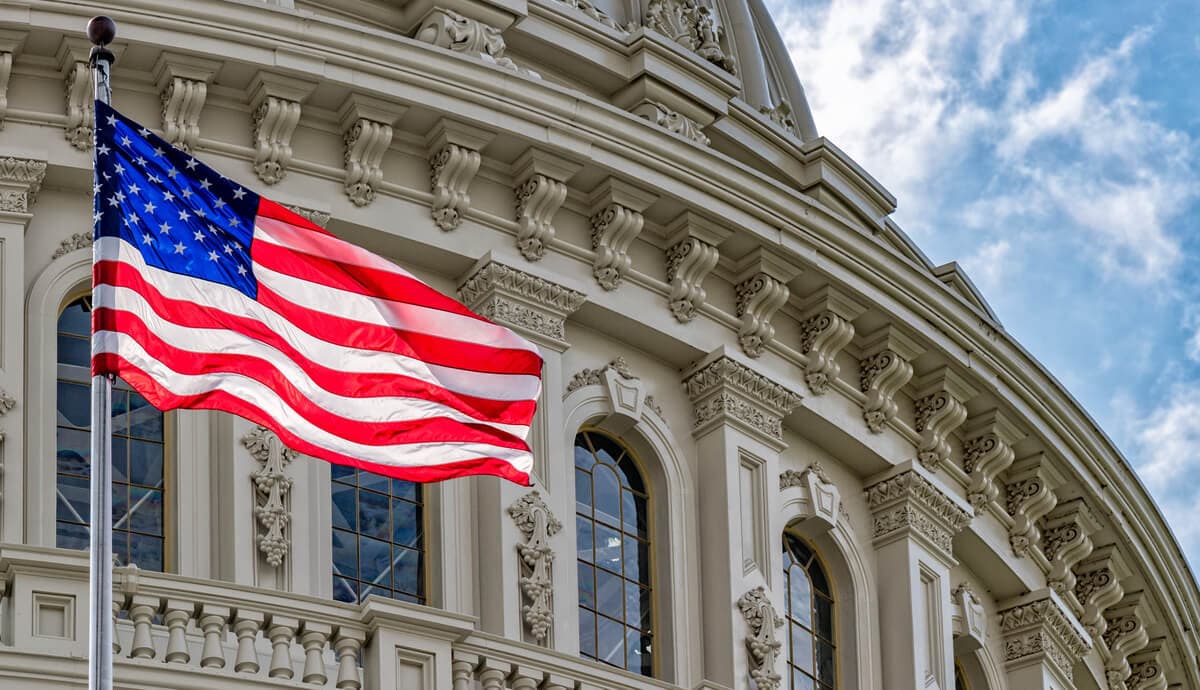
The US legislative elections, due next Tuesday (3 November), could mark an important shift for the cryptocurrency market. With Democrats favoured to win control of at least one of the two chambers of Congress, the sector risks losing part of the political support that has helped drive the regulatory agenda over the past two years.
The midterm elections, held halfway through a presidential term, will decide all 435 seats in the House of Representatives and roughly a third of the Senate. The outcome will determine how much room President Donald Trump has to advance his proposals in the final two years of his term.
For the crypto sector, the concern goes beyond an immediate price reaction. Since Trump returned to the White House, the United States has passed specific legislation on stablecoins and moved forward with discussions on rules for the digital asset market. A Democratic win, however, could stall part of that momentum.
According to a report by The Block published on Wednesday (28 October), regulatory experts expect a significant shift in how Congress operates, with greater scrutiny of crypto companies and less willingness to pass industry-friendly bills.
The prediction platforms cited by the outlet put the probability of a Democratic win at 90% for the House and 64% for the Senate. These figures reflect the expectations of participants in those markets, not a guarantee of the election result.
A report from this week's MB Explica — educational content sent weekly to clients of Mercado Bitcoin, a Brazilian crypto exchange — also highlights the possibility of a change of direction in Washington, but notes that the impact on Bitcoin will depend both on the composition of Congress and on how investors react to political uncertainty.
Democratic win could make it harder to pass crypto legislation
One of the main points of attention for the sector is the future of the Clarity Act, a bill that seeks to set clearer rules for the US cryptocurrency market, including dividing responsibilities between the Securities and Exchange Commission (SEC) and the Commodity Futures Trading Commission (CFTC).
The bill was passed by the House of Representatives in 2025, when Republicans controlled Congress, but ran into resistance in the Senate.
In September this year, a preliminary vote ended 50 in favour and 49 against, short of the 60 votes needed to advance. Among the main obstacles were disagreements over stablecoin regulation and concerns about Trump's financial interests in crypto companies and projects.
With a possible Democratic win, the bill's progress could face even greater difficulties.
In the Senate, for instance, Elizabeth Warren, known for her critical stance on the sector, could take the chair of the Banking Committee if Democrats secure a majority. The senator has called for stricter rules to prevent financial crime, protect consumers and avoid conflicts of interest.
Ron Hammond, head of policy and government relations at Wintermute, told The Block that Warren could take a particularly tough line in overseeing the industry, including investigations into banking charters granted to companies such as Ripple, Coinbase and World Liberty Financial, linked to the Trump family.
In the House, the contest for the chair of the Financial Services Committee could also change Congress's relationship with crypto companies. Democrat Maxine Waters, who has previously chaired the committee, is one of the possible candidates, but faces competition from other party members such as Sean Casten and Bill Foster.
The impact would not be limited to passing new laws. With control of congressional committees, Democrats could summon executives, demand documents and investigate decisions made by regulators during the Trump administration.
Another closely watched race is in Ohio, where Republican Jon Husted faces Democrat Sherrod Brown, a former chair of the Senate Banking Committee and a critic of the crypto market. The race has drawn attention because Brown could take up a prominent role on another committee responsible for reviewing bills related to digital assets.
Despite this scenario, a Democratic win does not necessarily mean the end of regulatory initiatives. Part of the party also supports creating rules for the industry, albeit with greater emphasis on consumer protection, anti-money laundering measures and conflicts of interest.
In addition, Trump will remain president and could veto bills passed by Congress, raising the likelihood of standoffs between the legislature and the White House.
The importance of these elections for the sector is evident in campaign spending. According to a Reuters survey, groups linked to the crypto industry have already put around US$176 million into more than 100 races, in an attempt to elect candidates favourable to the sector.
Of that total, around US$150.8 million was channelled through Fairshake and associated committees, funded mainly by companies such as Coinbase, Ripple and the venture firm Andreessen Horowitz.
The goal is to extend the sector's political influence regardless of who occupies the White House in the coming years.
Three scenarios for the crypto market after the elections
The MB Explica report outlines three possible outcomes for the US elections, each with different consequences for the crypto market.
The first would be Republicans retaining control of both the House and the Senate. Considered the least likely outcome, this would be the most favourable to the continuity of Trump's regulatory agenda, making it easier to resume discussions on the Clarity Act and other industry-focused initiatives.
The second scenario would be a divided Congress, with Republicans controlling one chamber and Democrats the other. In that case, passing new laws would depend on negotiations between the parties, increasing the likelihood of deadlock.
The third scenario, described by the report as the most likely, would be a Democratic win in both chambers. This would give the opposition greater ability to block bills, lead investigations and pressure the Trump administration on crypto-related matters.
While this outcome might initially be read as negative for the sector, MB Explica notes that the market also reacts to expectations priced in ahead of the vote. A Democratic win already widely anticipated by investors could therefore trigger a limited reaction, while a surprise result could set off more pronounced swings.
The report also points to the possibility that the Trump administration could keep part of its crypto-friendly agenda alive through administrative measures and regulatory decisions, even facing an opposition-controlled Congress.
On the other hand, a rise in congressional investigations and difficulty passing new laws could increase legal uncertainty for companies looking to expand their operations in the United States.
What could happen to the Bitcoin price?
If the future of regulation depends directly on the composition of Congress, the impact of the elections on the Bitcoin price is far less predictable.
Historically, the cryptocurrency's behaviour around midterm elections has been marked by volatility, but there is no clear relationship between a party's victory and the asset gaining or losing value.
A survey published by CoinDesk this week shows Bitcoin posted an average gain of 53.7% in the 12 months following the 2014, 2018 and 2022 elections.
That performance does not mean the elections caused those gains. All three periods coincided with specific phases of Bitcoin's four-year cycle, tied to the halving, the event that cuts the issuance of new units of the cryptocurrency in half.
Short-term moves, moreover, were quite different.
According to a Bitfinex survey, in the 90 days following the 2014 and 2018 elections, Bitcoin lost 27.5% and 46.5%, respectively. After the 2022 elections, by contrast, the cryptocurrency gained 22.6% over the same period.
The difference shows that factors specific to each period carried significant weight on prices. In 2018, for example, the market was in a prolonged downturn, while in 2022 the collapse of the exchange FTX triggered a crisis of confidence across the sector.
In 2026, the backdrop has its own peculiarities. Bitcoin fell to around US$57,800 in July but recovered part of its losses and climbed back above US$80,000 in October, before coming under renewed selling pressure.
Mercado Bitcoin's analysis suggests the election result could trigger swings in the days that follow the vote. An unexpected Republican hold on both chambers could be well received by the market, while a Democratic win in both chambers could put initial pressure on prices.
The report stresses, however, that any prolonged drop should not automatically be attributed to the elections, since economic factors may continue to influence the cryptocurrency's performance.
These include Federal Reserve interest rate decisions, US inflation, the country's fiscal position and the performance of equity markets.
Bitfinex also notes that the market is heading into the elections with elevated leveraged positions in Bitcoin futures contracts, which could amplify swings if the result or economic conditions surprise investors.
For Mercado Bitcoin, the main effect of the elections will be to determine the pace at which the US crypto agenda moves forward, rather than necessarily set an immediate trend for the Bitcoin price.
With that in mind, the market will need to watch not only who wins a majority in the House and Senate, but also which lawmakers take over the committees responsible for financial regulation and how willing the new Congress will be to negotiate with the Trump administration.
For investors, the report's conclusion is that trying to call the election result and its effect on prices may matter less than sticking to a strategy suited to one's own risk profile. Mercado Bitcoin points, for example, to periodic contributions, known as Dollar Cost Averaging (DCA), as an alternative to reduce reliance on timing the best entry point into the market.
If you want to invest in cryptocurrencies safely, Mercado Bitcoin offers a special benefit for our readers: use the code PORTAL250 when signing up and get 8 EUR in Bitcoin as a bonus when you buy 41 EUR worth of assets. Click here to open your account.